


A content brief is the difference between a blog post that ranks and converts and one that misses the mark entirely. Without a brief, writers guess at the topic angle, keyword targets, and audience intent. Guessing produces inconsistent results.
A strong brief takes 30 minutes to create and saves hours of revision. Here is how to build one.
What Is a Content Brief?
A content brief is a planning document that gives a writer everything they need to produce a blog post aligned with SEO goals and business objectives. The brief defines the target keyword, search intent, audience, structure, and key points to cover.
A content brief is not a finished outline. The writer uses the brief as a starting point and brings their own expertise to the final structure and phrasing. The brief sets the direction. The writer drives the execution.
Why Content Briefs Matter for SaaS Companies
SaaS content requires product knowledge, keyword precision, and audience awareness. A writer producing content without a brief might create a well-written article that targets the wrong keyword, misses the search intent, or fails to mention the product.
Briefs solve three problems:
- Alignment: Everyone agrees on the topic, angle, and goals before writing begins
- Consistency: Every post follows the same SEO standards regardless of who writes it
- Efficiency: Fewer revision rounds because expectations are documented upfront
Teams publishing 4 or more posts per month need briefs to maintain quality at scale. Working with content marketing agencies almost always involves a formal brief process for this reason.
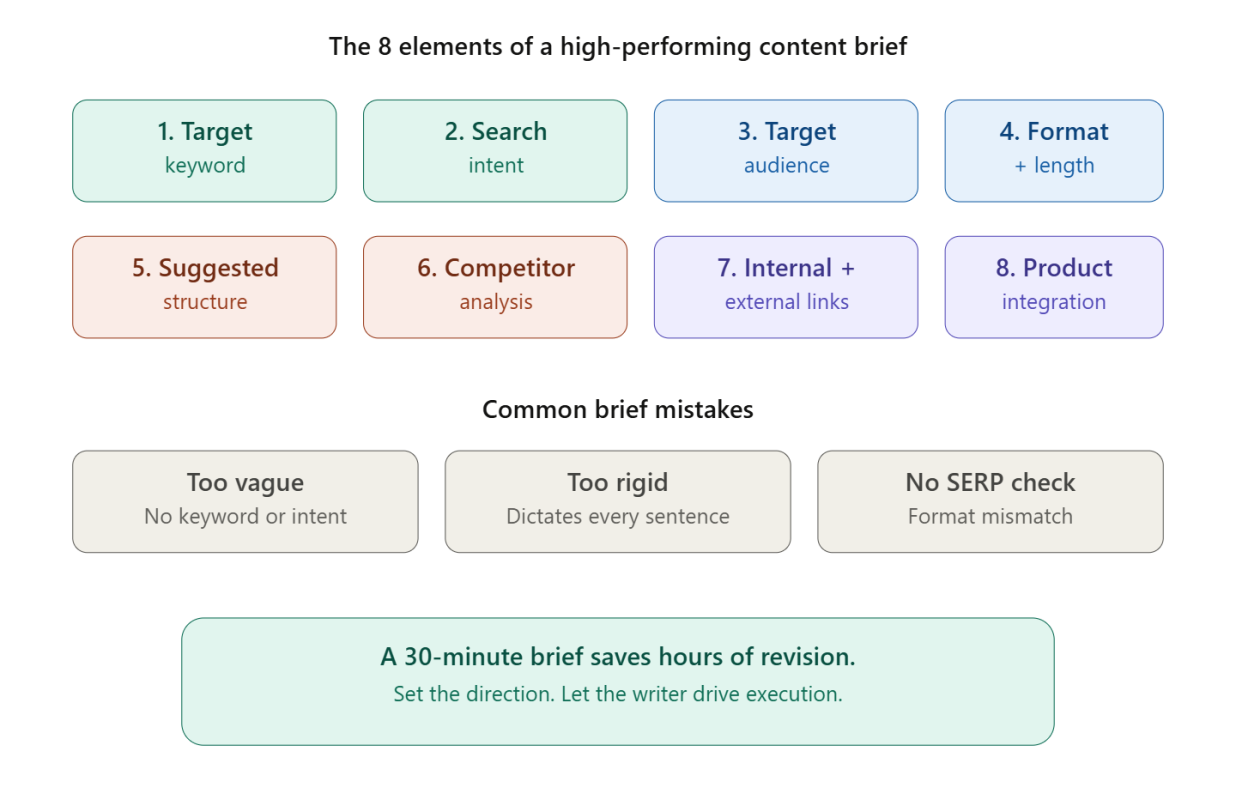
The 8 Elements Every Content Brief Needs
Include these eight components in every brief to give writers clear, actionable direction.
Element 1: Target Keyword
Specify the primary keyword the post should rank for. Include 3 to 5 secondary keywords that the post should also address naturally.
Example:
- Primary: “best CRM for startups”
- Secondary: “startup CRM tools,” “CRM for early stage companies,” “affordable CRM software”
Element 2: Search Intent
Describe what the reader expects when they search for the target keyword. Check the top 10 Google results and note the common format, depth, and angle.
Example: “Readers searching ‘best CRM for startups’ expect a ranked listicle of 8 to 12 CRM tools with pricing, features, pros, and cons for each.”
Element 3: Target Audience
Define who the reader is. Include their role, company size, and the problem they are trying to solve. A brief for “best CRM for startups” targets early-stage founders and sales leads evaluating their first CRM purchase.
Element 4: Content Format and Length
Specify the format (listicle, how-to guide, comparison, tutorial) and target word count. Match both to what currently ranks for the target keyword.
Example: “Listicle format, 1,200 to 1,500 words. Top-ranking pages average 1,400 words with a comparison table.”
Element 5: Suggested Structure
Provide a recommended outline with H2 and H3 headers. The writer can adjust the structure, but the brief ensures all critical subtopics are covered.
Example structure for “best CRM for startups”:
- H2: What to look for in a startup CRM
- H2: The 10 best CRMs for startups in 2026 (H3 for each tool)
- H2: How to choose the right CRM for your startup
- H2: FAQs
Element 6: Competitor Analysis
List the top 3 to 5 ranking URLs for the target keyword. Note what each one does well and where gaps exist. The writer should aim to fill those gaps with better information, more current data, or a unique angle.
Studying how top SEO companies conduct competitor analysis for content briefs provides a solid framework to follow.
Element 7: Internal and External Links
Specify which internal blog posts to link to and suggest anchor text. Include any external sources the writer should reference, such as studies, reports, or authoritative guides.
Example:
- Internal link: “SaaS SEO agencies” linking to /blog/top-saas-seo-agencies/
- External source: Include a stat from a relevant industry report
Element 8: Product Integration Notes
For product-led content, describe where and how the product should appear. Specify which features to highlight, which screenshots to include, and how prominently the product should be positioned relative to competitors.
Example: “Mention [Product] as the #2 recommendation. Include a screenshot of the dashboard. Highlight the AI lead scoring feature as the key differentiator.”
Content Brief Template
Here is a simplified template you can copy and customize:
| Brief Element | Details |
| Primary keyword | [keyword] |
| Secondary keywords | [3-5 keywords] |
| Search intent | [description of what the reader expects] |
| Target audience | [role, company size, problem] |
| Format and length | [listicle/guide/comparison, word count] |
| Suggested structure | [H2 and H3 outline] |
| Top competitors | [3-5 URLs with notes] |
| Internal links | [blog posts to link to with anchor text] |
| External sources | [stats, reports, references to include] |
| Product mention | [how and where to feature the product] |
Common Content Brief Mistakes
Briefs fail when they are either too vague or too rigid.
Too Vague
A brief that says “write about CRM for startups” gives the writer nothing to work with. The keyword target, audience, format, and competitive landscape are all missing. The result is a generic post that does not rank.
Too Rigid
A brief that dictates every sentence removes the writer’s ability to add expertise and creativity. Prescribe the direction and structure, not the exact wording. A brief should guide, not dictate.
Missing Search Intent
A brief that specifies a keyword but ignores intent leads to format mismatches. If every ranking page is a comparison table and the brief calls for a narrative essay, the post will not rank regardless of quality.
No Competitor Research
Skipping competitor analysis means the writer does not know what already exists. The resulting content often duplicates what is already ranking instead of improving on it. Reviewing how AI writing tools are compared in competitor content shows common structural patterns worth studying.
Scale Content Quality With Better Briefs
A content brief is a 30-minute investment that multiplies the impact of every blog post. Start using briefs for every article, refine the template based on writer feedback, and watch consistency and conversion rates improve together.
Share your content brief template or biggest challenge in the comments, or explore our guide to content creation services for teams that handle the entire process from brief to published post.
Frequently Asked Questions
What is a content brief?
A content brief is a planning document that gives a writer the target keyword, search intent, audience profile, suggested structure, and competitive analysis needed to produce a blog post aligned with SEO and business goals.
How long does it take to create a content brief?
A thorough content brief takes 20 to 40 minutes to create, including keyword research, SERP analysis, and competitor review. The time investment saves hours of revision and alignment later.
Who should create content briefs?
Content strategists, SEO specialists, or marketing managers typically create briefs. The person creating the brief should understand keyword research, search intent, and the product being marketed.
Should content briefs include an exact outline?
Briefs should include a suggested outline with H2 and H3 headers, but the writer should have flexibility to adjust the structure based on their expertise and the flow of the content.
How detailed should competitor analysis be in a brief?
Include the top 3 to 5 ranking URLs with notes on what each does well, what gaps exist, and what the new post should do differently to provide more value.
Can AI tools help create content briefs?
AI tools can assist with keyword research, SERP analysis, and drafting initial outlines. The strategic decisions about audience, product integration, and competitive positioning should come from a human strategist.